
Understanding Structured, Semi-Structured, and Unstructured Data and Their Impact on ML Pipelines
Abstract
Data is the foundation of every Machine Learning (ML) system. The structure, format, and organization of data directly influence how models are designed, trained, and deployed. In real-world applications, data appears in multiple forms—structured, semi-structured, and unstructured—each requiring different preprocessing techniques, storage systems, and modeling approaches. Understanding these data types is essential for designing effective ML pipelines that transform raw data into meaningful insights. This paper provides a detailed explanation of these three major data categories and discusses their implications for machine learning workflows, including data preprocessing, feature engineering, model selection, and deployment.
Introduction
Machine learning systems rely heavily on data quality and organization. While algorithms often receive significant attention, the structure and format of data determine how effectively machine learning models can learn patterns and make predictions.
In practical environments, organizations collect data from multiple sources such as:
- Databases
- Transaction systems
- Sensors
- Images and videos
- Text documents
- Web logs
- IoT devices
- APIs
These sources generate data in different formats and structures. As a result, machine learning engineers must design pipelines capable of handling diverse data types.
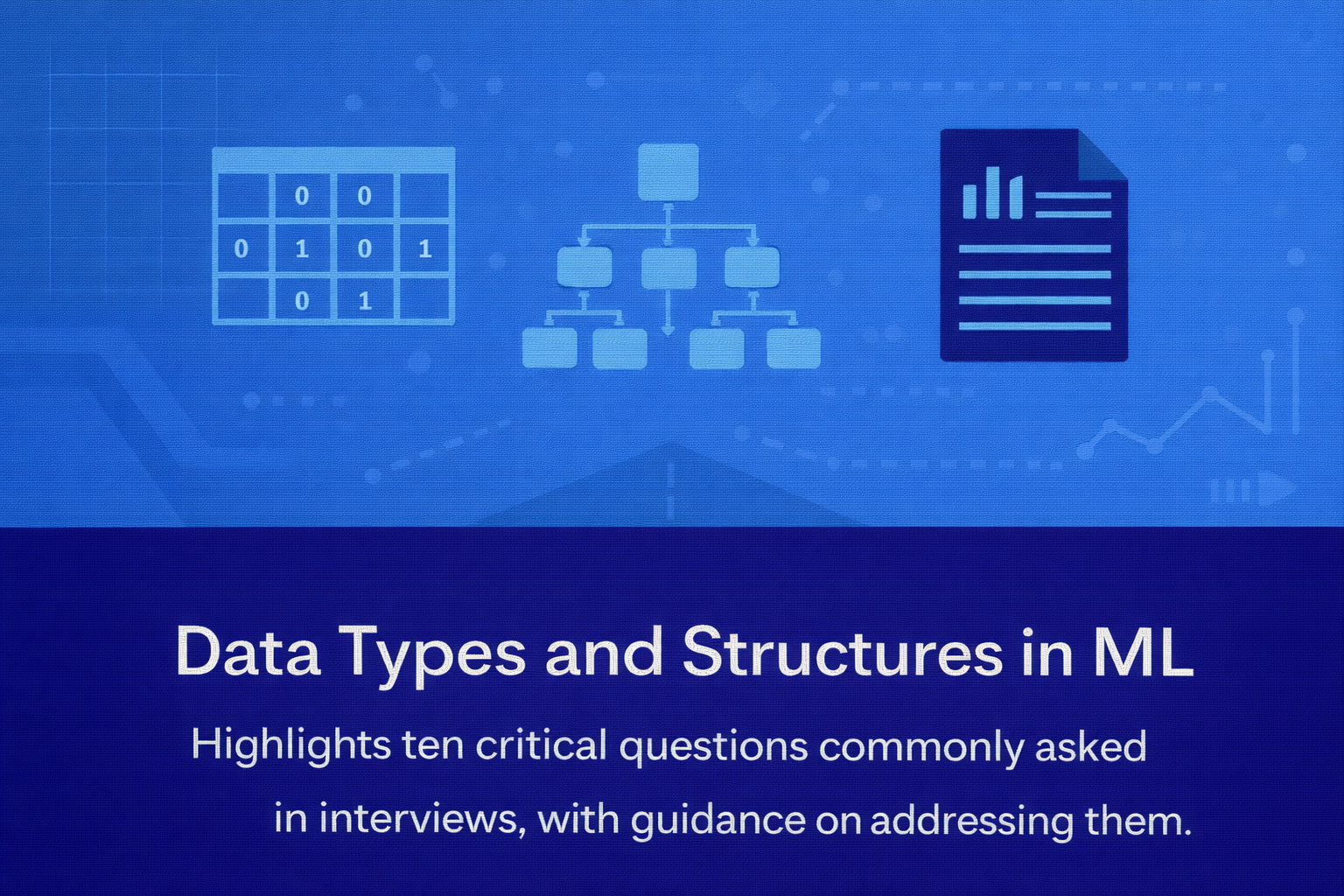
Data used in ML systems is typically categorized into three main types:
- Structured Data
- Semi-Structured Data
- Unstructured Data
Each type has unique characteristics and requires specific processing techniques before it can be used in machine learning models.
Understanding these distinctions helps practitioners choose appropriate storage systems, preprocessing techniques, and modeling strategies.
Structured Data
Definition
Structured data refers to information that is organized into a predefined schema with clearly defined rows and columns. It is typically stored in relational databases and follows a consistent format that allows easy querying and analysis.
Structured data is the most traditional and widely used type of data in machine learning systems.
Characteristics
Structured data typically has the following properties:
- Organized in tables with rows and columns
- Fixed schema
- Clearly defined data types
- Easily searchable using query languages such as SQL
- Highly suitable for statistical analysis
Examples
Common examples of structured data include:
- Customer transaction records
- Financial data
- Sales reports
- Medical records
- Banking transactions
- Inventory data
A typical structured dataset may look like a table with fields such as:
Customer_ID | Age | Income | Purchase_Amount | Location
Each row represents a single observation and each column represents a specific attribute.
Storage Systems
Structured data is usually stored in relational database systems such as:
- MySQL
- PostgreSQL
- Oracle
- SQL Server
These systems enforce schema definitions and ensure data consistency.
Role in Machine Learning
Structured data is often the easiest data type to use in machine learning pipelines because it requires minimal preprocessing compared to other data types.
Most traditional machine learning algorithms are designed to work directly with structured data, including:
- Linear regression
- Logistic regression
- Decision trees
- Random forests
- Gradient boosting models
Example: Credit Risk Prediction
A bank may use structured data such as:
- Credit score
- Income level
- Loan amount
- Employment status
- Repayment history
These variables can be directly used as features in a machine learning model predicting loan default risk.
Implications for ML Pipelines
Structured data pipelines usually involve:
- Data cleaning
- Handling missing values
- Feature scaling
- Encoding categorical variables
- Feature engineering
Since the schema is predefined, automated pipelines can easily process structured datasets.
Semi-Structured Data
Definition
Semi-structured data does not follow a rigid table-based schema but still contains organizational elements such as tags, keys, or metadata that provide structure.
This data type sits between structured and unstructured data.
Characteristics
Semi-structured data typically has the following features:
- Flexible schema
- Hierarchical organization
- Metadata or tagging
- Key-value relationships
Unlike structured data, the fields may vary between records.
Examples
Common examples include:
- JSON files
- XML documents
- YAML configurations
- Web server logs
- API responses
- NoSQL database entries
Example JSON structure:
{
“customer_id”: 123,
“name”: “John”,
“orders”: [
{“product”: “Laptop”, “price”: 1200},
{“product”: “Mouse”, “price”: 20}
]
}
This data contains nested structures and arrays rather than simple rows and columns.
Storage Systems
Semi-structured data is commonly stored in NoSQL databases such as:
- MongoDB
- Cassandra
- DynamoDB
- Couchbase
These systems allow flexible schemas and dynamic fields.
Role in Machine Learning
Semi-structured data often requires data transformation before it can be used for model training.
Processing typically involves:
- Parsing hierarchical structures
- Extracting relevant fields
- Flattening nested attributes
- Converting data into structured feature tables
Example: Web Analytics
Web logs often contain semi-structured data such as:
- User ID
- Page visited
- Timestamp
- Browser information
- Device type
These logs must be parsed and transformed into structured features before they can be used in machine learning models for tasks such as user behavior analysis or recommendation systems.
Implications for ML Pipelines
Handling semi-structured data often involves additional pipeline steps such as:
- Data parsing
- Schema inference
- Feature extraction
- Data transformation
Modern big data frameworks such as Apache Spark and data processing tools like Apache Kafka are frequently used to manage semi-structured data streams.
Unstructured Data
Definition
Unstructured data refers to information that does not follow a predefined schema or organizational structure.
It is the most complex type of data to process in machine learning pipelines.
Characteristics
Unstructured data typically:
- Has no fixed format
- Cannot be easily stored in relational tables
- Requires advanced processing techniques
- Contains rich contextual information
Despite its complexity, unstructured data represents the majority of data generated globally.
Examples
Common forms of unstructured data include:
- Images
- Videos
- Audio recordings
- Text documents
- Emails
- Social media posts
- Sensor recordings
For example, a photograph contains millions of pixel values that must be interpreted by computer vision algorithms.
Storage Systems
Unstructured data is typically stored in systems such as:
- Object storage systems
- Data lakes
- Distributed file systems
Examples include:
- Amazon S3
- Hadoop Distributed File System (HDFS)
- Google Cloud Storage
- Azure Blob Storage
Role in Machine Learning
Unstructured data requires specialized preprocessing techniques and deep learning models.
Examples include:
Text data processing:
- Natural Language Processing (NLP)
- Tokenization
- Word embeddings
Image processing:
- Convolutional neural networks
- Feature extraction
Audio processing:
- Speech recognition models
- Spectrogram analysis
Example: Social Media Sentiment Analysis
In sentiment analysis, machine learning models analyze unstructured text such as tweets or customer reviews.
Before training models, the text must be processed through steps such as:
- Tokenization
- Stop-word removal
- Text vectorization
- Embedding generation
These steps convert raw text into numerical representations suitable for machine learning algorithms.
Implications for ML Pipelines
Processing unstructured data requires more complex pipelines that often include:
- Data ingestion
- Data labeling
- Feature extraction
- Model training with deep learning architectures
These pipelines often rely on specialized frameworks such as:
- TensorFlow
- PyTorch
- Hugging Face Transformers
Comparing Data Types in ML Systems
Structured data is highly organized and easy to process but may lack rich contextual information.
Semi-structured data offers flexibility and scalability but requires transformation before modeling.
Unstructured data provides deep contextual insights but requires complex preprocessing and advanced algorithms.
Most modern AI systems integrate all three data types to produce comprehensive insights.
Data Types in Modern ML Pipelines
Real-world machine learning systems rarely rely on a single type of data.
Consider a recommendation system for an e-commerce platform.
Structured data may include:
- Purchase history
- Customer demographics
- Transaction records
Semi-structured data may include:
- Web logs
- Clickstream data
- API responses
Unstructured data may include:
- Product images
- Customer reviews
- Social media feedback
A robust ML pipeline must combine all these sources to produce accurate recommendations.
Challenges in Handling Different Data Types
Machine learning pipelines must address several challenges when working with diverse data formats.
These challenges include:
- Data integration across different systems
- Large-scale storage requirements
- Feature extraction from complex formats
- Data labeling for unstructured datasets
- Real-time data processing
Solving these challenges requires careful system design and appropriate technology choices.
Conclusion
Understanding data types and structures is fundamental to building effective machine learning systems. Structured, semi-structured, and unstructured data each present unique opportunities and challenges for ML pipelines.
Structured data offers simplicity and ease of analysis, semi-structured data provides flexibility for dynamic data sources, and unstructured data enables rich insights from text, images, and multimedia.
Successful machine learning pipelines integrate these data types through robust preprocessing, feature engineering, and scalable infrastructure. As AI systems continue to evolve, the ability to manage diverse data structures will remain a critical skill for machine learning practitioners and data engineers.