
Understanding GDPR and CCPA Compliance for Handling Sensitive Data
Abstract
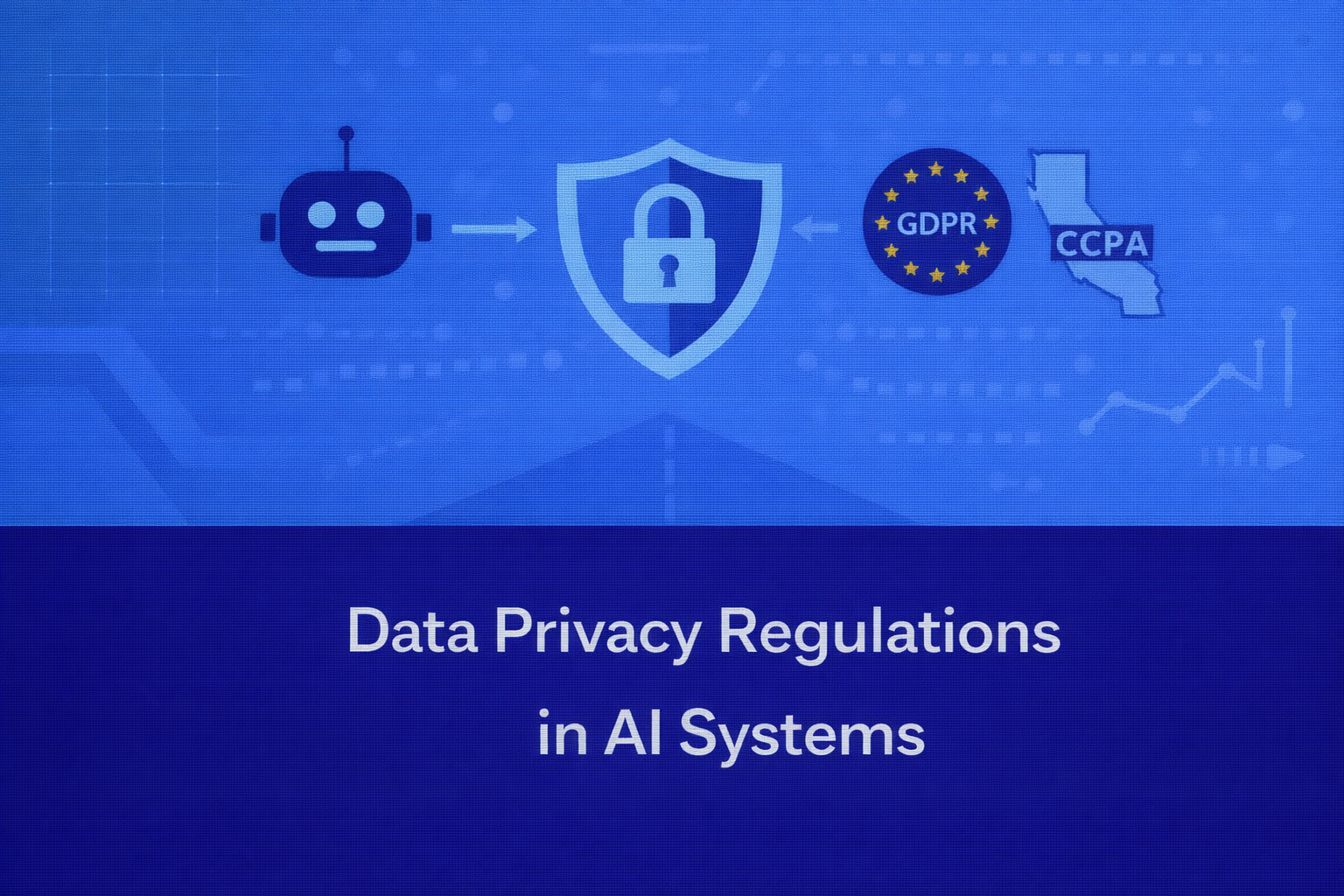
Artificial Intelligence systems increasingly rely on large datasets containing personal and sensitive information. As organizations collect, process, and analyze data to build predictive models, concerns about privacy, security, and ethical data use have grown significantly. Governments and regulatory bodies have introduced strict data protection laws to ensure responsible data handling. Among the most influential regulations are the General Data Protection Regulation (GDPR) in the European Union and the California Consumer Privacy Act (CCPA) in the United States. These regulations impose legal requirements on how organizations collect, process, store, and share personal data. This article explains the key principles of GDPR and CCPA, their implications for AI and machine learning systems, and best practices for building privacy-compliant data pipelines.
Introduction
Artificial Intelligence systems depend heavily on data to learn patterns and generate predictions. In many cases, this data includes personal information such as:
- names and contact details
- financial records
- healthcare information
- behavioral data
- online activity logs
- biometric identifiers
The collection and use of such information raise serious privacy concerns. Without proper safeguards, AI systems may expose sensitive information or use personal data in ways that individuals did not consent to.
To address these concerns, governments have introduced privacy regulations designed to protect individuals’ data rights.
Two of the most important regulations affecting AI systems are:
- General Data Protection Regulation (GDPR)
- California Consumer Privacy Act (CCPA)
These laws establish rules governing how organizations must handle personal data and ensure that individuals maintain control over their information.
Understanding these regulations is essential for building responsible and legally compliant AI systems.
Why Data Privacy Matters in AI
AI systems often analyze large datasets to uncover patterns and generate predictions. However, if personal data is used without adequate protections, several risks may arise.
These risks include:
- unauthorized access to personal information
- identity theft and fraud
- discrimination based on personal characteristics
- loss of public trust in AI systems
For example, an AI model trained on sensitive healthcare data may inadvertently reveal private patient information if the data is not properly anonymized.
Privacy regulations aim to ensure that organizations collect and use personal data responsibly.
Overview of GDPR
Definition
The General Data Protection Regulation (GDPR) is a comprehensive data protection law introduced by the European Union in 2018.
It governs how organizations collect, store, process, and share personal data belonging to individuals within the European Economic Area.
GDPR applies not only to organizations located within the EU but also to companies outside the EU if they process the personal data of EU residents.
Key Principles of GDPR
GDPR is built on several fundamental principles that guide responsible data processing.
Lawfulness, fairness, and transparency
Organizations must process personal data legally and inform individuals about how their data is used.
Purpose limitation
Data must be collected for specific and legitimate purposes and not used for unrelated activities.
Data minimization
Only the minimum amount of data necessary for a given purpose should be collected.
Accuracy
Organizations must ensure that personal data is accurate and kept up to date.
Storage limitation
Data should not be retained longer than necessary.
Integrity and confidentiality
Personal data must be protected through appropriate security measures.
Accountability
Organizations must demonstrate compliance with data protection requirements.
These principles ensure that personal data is handled responsibly throughout its lifecycle.
Rights of Individuals Under GDPR
GDPR grants several rights to individuals regarding their personal data.
These rights include:
Right to access
Individuals can request access to the personal data that organizations hold about them.
Right to rectification
Individuals can request corrections to inaccurate data.
Right to erasure (Right to be forgotten)
Individuals can request deletion of their personal data.
Right to data portability
Individuals can request their data in a portable format.
Right to restrict processing
Individuals can limit how their data is used.
Right to object
Individuals can object to certain types of data processing.
These rights empower individuals to control how their information is used.
GDPR and AI Systems
GDPR has significant implications for AI and machine learning models.
Organizations using AI must ensure:
- training data is collected lawfully
- personal data is anonymized where possible
- individuals can request deletion of their data
- automated decision-making systems provide transparency
For example, if an AI model uses personal financial data to make credit decisions, individuals must have the ability to understand and challenge those decisions.
Overview of CCPA
Definition
The California Consumer Privacy Act (CCPA) is a data privacy law enacted in the state of California in 2020.
It provides California residents with greater control over how businesses collect and use their personal information.
Although CCPA applies specifically to California, many companies adopt its standards globally due to the large number of users affected.
Key Principles of CCPA
CCPA focuses on transparency and consumer control over personal data.
Organizations must disclose:
- what personal data is collected
- how it is used
- whether it is shared with third parties
Businesses must also allow users to opt out of the sale of their personal information.
Consumer Rights Under CCPA
CCPA grants several rights to consumers.
Right to know
Consumers can request information about the data collected about them.
Right to delete
Consumers can request deletion of their personal information.
Right to opt out
Consumers can opt out of the sale of their personal data.
Right to non-discrimination
Businesses cannot discriminate against consumers who exercise their privacy rights.
These provisions increase transparency and accountability in data processing.
CCPA and AI Systems
AI systems that analyze consumer behavior must comply with CCPA requirements.
Organizations must:
- disclose how AI systems use consumer data
- allow users to opt out of data sharing
- provide mechanisms to delete personal data upon request
For example, an AI-driven recommendation engine analyzing shopping behavior must allow users to request deletion of their purchase history.
Key Differences Between GDPR and CCPA
Although both regulations aim to protect personal data, they differ in scope and enforcement.
GDPR is generally considered more comprehensive and applies broadly to organizations processing EU citizens’ data.
CCPA focuses primarily on consumer rights related to data transparency and control.
GDPR requires explicit consent before collecting personal data, while CCPA focuses more on giving consumers the ability to opt out of data usage.
Despite these differences, both regulations emphasize responsible data management and transparency.
Compliance Strategies for AI Systems
Organizations developing AI systems must implement several measures to comply with data privacy regulations.
Data Anonymization
Sensitive information should be anonymized or pseudonymized before being used in machine learning models.
Anonymization removes identifying information so that individuals cannot be linked to the dataset.
Data Minimization
AI systems should collect only the data necessary for a specific purpose.
Excessive data collection increases privacy risks and regulatory exposure.
Secure Data Storage
Sensitive data should be protected through encryption, access controls, and secure storage systems.
This prevents unauthorized access and potential data breaches.
Transparency and Explainability
Organizations must clearly communicate how AI systems use personal data.
Explainable AI techniques can help ensure that automated decisions are understandable.
Data Governance Frameworks
Strong governance policies help organizations manage data responsibly.
This includes:
- data access controls
- audit mechanisms
- compliance monitoring
- employee training on data privacy
Challenges in AI Privacy Compliance
Ensuring privacy compliance in AI systems presents several challenges.
Large datasets may contain hidden personal identifiers.
AI models trained on historical data may retain sensitive patterns even after anonymization.
Additionally, global organizations must comply with multiple privacy regulations simultaneously.
These challenges require careful system design and ongoing compliance monitoring.
Conclusion
As artificial intelligence systems increasingly rely on personal data, protecting privacy has become a critical responsibility for organizations. Regulations such as the General Data Protection Regulation (GDPR) and the California Consumer Privacy Act (CCPA) establish clear guidelines for how personal data must be collected, processed, and protected.
These laws emphasize transparency, user control, and responsible data handling. For AI developers and organizations, compliance requires implementing secure data pipelines, minimizing data collection, ensuring transparency in automated decisions, and respecting individuals’ rights over their personal information.
Building privacy-aware AI systems not only ensures legal compliance but also strengthens public trust in artificial intelligence technologies. As data-driven systems continue to expand across industries, integrating privacy protections into AI design will remain essential for ethical and sustainable innovation.